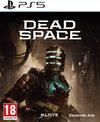
Dead Space is one of the true legends of the survival horror genre, and EA Motive’s new remake does the original game full justice while also introducing a variety of fantastic new additions and reworkings. Other than some slight disappointment in its visuals on a technical (but certainly not artistic or atmospheric) level, this is a remake that finds a near-perfect balance between retaining the heart and soul of its predecessor and reanimating its body in some unexpected (but positive) ways.
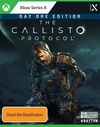
The Callisto Protocol feels like a throwback title, for better and worse. While the Dead Space comparisons are unavoidable, director Glen Schofield’s return to survival horror does bring with it several new concepts, but many, like the melee combat system, suffer from poor execution. Still, if you’re looking for a fun, B-movie disaster story with some famous Hollywood faces and a more straightforward, linear single-player experience, you could do worse—at least until the Dead Space remake launches next year.
Pentiment is a true achievement of marrying story, style, and theme into a magical and cohesive whole. In lieu of 3D graphics that try too hard and still fail to represent an authentic-feeling world, Obsidian’s artists opted for a more illustrative aesthetic to tell their gripping story of a murder in an abbey, a choice that resonates throughout the entire game. While it might not satisfy every player, especially those expecting a more traditional RPG or adventure experience, those who can immerse themselves in Pentiment’s vision of 16th century Bavaria will find one of the best games of the year.
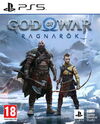
God of War Ragnarök is a worthy continuation of (and conclusion to) 2018’s God of War, building on that already strong foundation to deliver an experience deserving of a spot in gaming’s pantheon. New tools and greater enemy variety elevate combat, and the expanded environments and cast give this sequel the epic scope its story demands. But the beating heart of the game remains its characters, and Ragnarök delivers an immensely satisfying next chapter for just about everyone—Kratos and Atreus, returning friends, and new faces alike.
Gotham City might never have looked better, but Gotham Knights’ gameplay repetition and lack of length to the main narrative might deter all but the most hardcore Batman fans. Co-op adds a fun layer to all the crime fighting, and every character feels truly different from one another, even if the combat system takes some getting used to. Overall, there is a solid core here that hopefully can be built on in the future.
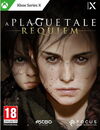
Siblings Amicia and Hugo went to hell and back in A Plague Tale: Innocence in their quest to survive an inquisition, endless hordes of rats, and the humans that looked to take advantage of the young boy’s curse. And now, in A Plague Tale: Requiem, they must pay the devil his due. This is the tale of the duo wanting to control their own fate as the fragile peace they had found falls apart, and the harsh lesson that their choices have consequences. As a game, Requiem is a bigger, better, and more ambitious adventure over its predecessor, but as a story, and a look into the lives of the characters that inhabit it, it’s so much more.
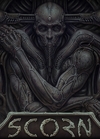
Scorn is a daring aesthetic experiment in virtual, interactive science fiction. Taking inspiration from the art of H.R. Giger and Zdzislaw Beksiński, developer Ebb Software seems hellbent on giving its players a surreal, nightmarish experience, and it mostly succeeds. While combat can feel like a secondary concern, Scorn’s puzzles provide just enough challenge to keep the game from feeling like a “walking simulator.” Really, though, the main attraction is Scorn’s compelling world, a fully realized artistic vision that will haunt you for days after experiencing it.
Taiko no Tatsujin: Rhythm Festival is a solid new entry in Bandai Namco’s rhythm game franchise, offering a roster of fresh music to enjoy, some creative new game modes, and more unlockables to have fun collecting. The game doesn’t offer as many multiplayer options as its predecessor did, but does feature more to keep solo players occupied. Rhythm Festival also offers what is arguably the biggest addition the franchise has ever seen, the Taiko Music Pass—a new music subscription service that can greatly expand the life of the game while also bringing with it some additional concerns over our subscription-laiden future.
hovel Knight Dig isn’t just a cash-in on the series’ popularity. It’s a game that stands on its own merits as a worthy prequel to the original. The titular hero’s moveset translates perfectly to a more vertical orientation, and Nitrome’s bite-sized level design makes full use of Yacht Club’s well-established gameplay style. The 16-bit-style visuals and music are an absolute treat, especially for fans of the series, and the roguelike elements present a nice sense of progression and replayability. Shovel Knight Dig might not be the exact sequel that fans have been clamoring for, but it’s the next best thing.
You Suck at Parking introduces a creative twist to the isometric racing genre where “stopping” is the entire point. Its campaign is surprisingly extensive, with enough new obstacles and traps introduced throughout to keep things interesting. Unfortunately (and surprisingly), it’s the multiplayer that lets the game down by not offering enough variety or reasons to keep coming back, even with a season pass hanging over your head.
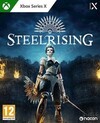
Steelrising is a new Souls-like twist on the French Revolution that unfortunately doesn’t see all of its lofty ambitions grow into accomplishments. While its gameplay is enjoyable once you get far enough to earn some unlocks and get main character Aegis more decked out, it tries to mimic elements of FromSoftware’s action RPG classics without always understanding what made said elements work. When Spiders leans less on taking inspiration from other games and more on presenting its own ideas, however, we get an intriguing—and surprisingly deep—alternate take on an important moment in France’s history.
Immortality finds creator Sam Barlow building on the found-footage FMV framework of Her Story and Telling Lies in ambitious and surprising new ways. That boldness pays off in the frame-shifting narrative, which encompasses three meticulously crafted feature films, their creation, and the sinister truth of what happened to the woman who starred in them. But the “match cut” system you use to navigate between clips and discover new ones means the actual process of piecing together the story is messier and less satisfying than in his previous work.
Saints Row pairs a great open-world city and respectable gameplay fundamentals with repetitive, dated mission design, a story that never finds its footing, and too many bugs to count. Depending on what you prioritize in a game, you may get some enjoyment out of it, but at best you’re looking at a diamond in a whole lot of rough.
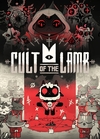
Cult of the Lamb is two games in one. Part roguelike, part management sim, neither of the halves feel totally fleshed out on their own, and provide little challenge. Still, the synergy between the two halves is undeniably compelling, and the art style is infectiously adorable, giving you enough reason to play through one more in-game day, and then one more, until you’ve been awake for an entire out-of-game day, feeling totally brainwashed.
As Dusk Falls is exciting, beautiful, and heavy-handed. Its more streamlined approach to narrative gameplay and its less traditional art style create an immersive experience that engages with the player’s imagination. That it can work both as a morally challenging single-player story and a party game for multiple players speaks to the confidence that its developers have. But its second half of the story undercuts some of the tension that its excellent first half builds, and a terrible cliffhanger might leave you feeling betrayed.
Escape Academy is an exceptionally well designed puzzle game, if not a flawlessly executed one. Developer Coin Crew Games has replicated the creativity and fine-tuned challenge of the best real-world escape rooms while amping up the fantasy and stakes in a way only video games can. But the studio’s inexperience rears its head when it comes to polish, with stiff console controls being the most obvious knock on an otherwise great experience.
EGM est un site internet de jeux vidéo édité aux États-Unis
56 940
jeux référencés
268 096
notes de presse
10
membres
8
avis des membres
23 177
jeux classables
2
contributions
118M
avis des stores
10
succès débloqués