More than once, I've looked up from playing Mewgenics and realized that it's 1:30AM. It's that kind of tactical turn-based roguelike, where every new run with a new set of mutant feline adventurers is full of potential for something you didn't know could happen, even after dozens of hours of runs. Maybe you'll earn a new ability for a character class you've used many times, or see some new devious enemies that never appeared in a zone before, or you'll get a new piece of gear that completely upends the rules and chaos will ensue. You'll definitely see something hilariously gross. There will almost certainly be times you'll be sent back to your house with your tail between your legs and have to breed a new batch of cats to avenge their mulched predecessors, but you'll do it to the tune of some outstanding original songs.
Highguard’s compelling gunplay, impressive pace of updates, and killer Raid mode have made its exciting attack-and-defend encounters quite memorable, even if the version we have right now feels a bit like a rough draft. The unique competitive matches definitely have room for improvement, with maps that can feel a little empty and rounds that are somewhat uneven between their slow looting lows and chaotic raiding highs. Plus, with just nine characters, a handful of maps and bases, and only one game mode served up in a few different flavors, there’s not a lot of meat on this bone just yet. But what is here at the moment is still a lot of fun on its own, and I can already feel the makings of something that could be pretty stellar if it’s able to survive long enough to fully realize that potential.
When Eternal Strands is good, it’s very good, thanks to exciting boss fights that iterate upon Shadow of Colossus’s gigantic encounters better than just about any of the other games that have used it as inspiration. While its story is underwhelming and some aspects of its gear progression are especially convoluted, the combat is built on an extremely strong foundation thanks to a versatile set of powers that encourage and reward creativity, especially in the showstopping Great Foe battles. The novelty does begin to fade after a while, especially when you’re forced to fight those same bosses and enemies again in the same locations, occasionally with frustrating weather effects, but the high points of Eternal Strands mitigate the low points enough to still make it an action RPG that’s easy to recommend.
By leaning into early 2000s nostalgia and then blending it with a stylish vision for the future, Zenless Zone Zero crafts an inimitable world that is easy to get invested in. Exploring New Eridu and getting to know this charming cast both in and out of combat was a thrilling ride I was keen to keep at for hours on end. It’s not necessarily as deep as many of its gameplay inspirations, and momentum-killing hacking puzzles can sometimes sour the mood slightly – but with exhilarating, approachable combat and so many extracurricular activities to take care of, it was always easy to turn a corner and get swept back up in the captivating culture of Zenless Zone Zero.
I was more than happy to revisit Shin Megami Tensei V, one of my favorite games of 2021, through this definitive version. Vengeance doesn't necessarily make drastic improvements per se, but I enjoyed the new twists, content, and quality of life upgrades it does bring all the same. And while the storyline and route exclusive to Vengeance are a bit better than the original, their appeal as a returning player is really just in how they shake things up at certain points. Don’t get it twisted, though – there’s never been a better time to play this hard-nosed RPG, if not for its satisfying turn-based combat, then for its masterful execution of a uniquely demonic world. There’s a certain attitude that comes through vividly in its art style, character design, and music that you just don’t get in other games. So, if you're simply looking for more SMT or have yet to experience Atlus’ devilish RPG series, Vengeance is absolutely worth seeing through.
Thanks to recent successes, we know exactly what a great South Park game looks like, and South Park: Snow Day! couldn’t be farther from it. I’m a huge fan of throwing out the rulebook to try something completely fresh, especially in this age of samey sequels and forever live-service games that increasingly play it safe, but this bold attempt at a new direction misses the mark so drastically I’m aghast at just how sideways things went. Whether it’s due to the thoroughly unenjoyable combat or the uncharacteristicly toothless and unfunny story, I can’t recommend anyone waste their time on this cooperative lost cause – even my fellow die-hard South Park fans.
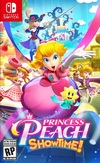
Princess Peach: Showtime! is more closely aligned with Kirby and Yoshi’s simple, cheery romps rather than Mario’s polished platformers and Luigi’s haunted mansions. There’s fun to be found in the Sparkle Theater, as these delightfully simplified takes on some of gaming’s most popular genres are entertaining to blast through, and the whimsical stage play aesthetic gives Peach’s game an identity all its own. I’m also thrilled that Nintendo is finally giving Peach another crack at her own solo outing after nearly two decades, and I hope this is the start of an ongoing spinoff series within the wider Mario universe. Some noticeable performance issues and the frustrating lack of a chapter select means I won’t be returning for an encore, and I wish there were a few extra levels to lengthen the somewhat brief campaign, but Nintendo and Princess Peach at least know how to put on a good show.
Neon White is a quick and compulsive first-person platformer that’s surprisingly simple to understand and play, but packs a very stern speedrunning challenge at its core. Tying your combat options to your traversal mechanics, Neon White makes every encounter a deadly parkour puzzle that can be replayed over and over, in search of the perfect run and the tightest time. The dialogue between its unlikeable troupe of angst-ridden, anime-inspired assassins may be a hokey misstep, but its airtight level design and fantastic sense of momentum ensure Neon White’s gameplay is something to celebrate.
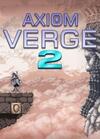
Axiom Verge 2 is a dual-dimensional Metroidvania that’s genuinely engaging to explore. Phasing in and out of the Breach to unlock new paths through the overworld – and vice versa – presented me with consistently stimulating environmental puzzles to solve, a process that evolved in surprising ways over the course of the campaign as hidden dimensional tears were uncovered and the manipulation of their placement was introduced. The same sense of accomplishment can’t be derived from the simplistic combat and mostly toothless boss fights, the last of which is responsible for the story stumbling to an anticlimax. Ultimately, Axiom Verge 2 is a sequel that largely delights thanks to its dual-world design, but I wish the developer could have polished it without having to file the difficulty spikes all the way down.
Anno 1800 is a grind at times, but those moments of “eureka” when I’d figure out production rhythms and layouts that kept me operating in the green were delightful. It toes a difficult line of welcoming strategy gaming novices while also providing gameplay that experienced tacticians can maximize, with a well-crafted story-based campaign adding on to an already tried-and-true sandbox formula. It’s a beautiful game to look at as well with only one minor issue that you have to really focus in on to see. Outright newcomers to this type of game will have a tough go at it, as important elements of Anno 1800 aren’t given comprehensive tutorials, but diligent gamers will excitedly watch hours fly by once they get settled in.
My Memory of Us packs one of the heaviest themes of our generation in a cheerful jacket. The total package leaves a bittersweet experience. The great diversity of puzzles and riddles keeps you busy, even though they vary greatly in terms of difficulty, and especially the drawing style and music drag you into the roughly four-hour story of two children who find friendship in a dark period. The developers respectfully deal with the theme by disguising Judaism and Nazis behind the colour red and robots, resulting in a specific humor that effectively creates awareness, although there is some discrepancy between the theme and the playing experience.
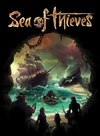
Sea of Thieves is a pirate fantasy sandbox with an enormous amount of things to do, made unpredictable and exciting by the addition of other players. Coordinating together across the deck of a massive pirate ship is pure chaos at times, but it’s also endlessly entertaining. The cosmetic-only progression system doesn’t give you as much incentive to keep playing as I’d have liked and its free-form nature left me feeling lost at sea at times – but if you’ve got a good group of two or three friends to play with, it’s hard to find a game as entertaining to jump aboard.IGN Nordic est un site internet de jeux vidéo édité en Suède
58 911
jeux référencés
271 190
notes de presse
11
membres
8
avis des membres
23 463
jeux classables
2
contributions
118M
avis des stores
11
succès débloqués